My first Toastmasters role: timekeeper, at one minute's notice
The timekeeper on the agenda couldn't make it, so I stood in at the last minute. What two minutes at the front of the room taught me.
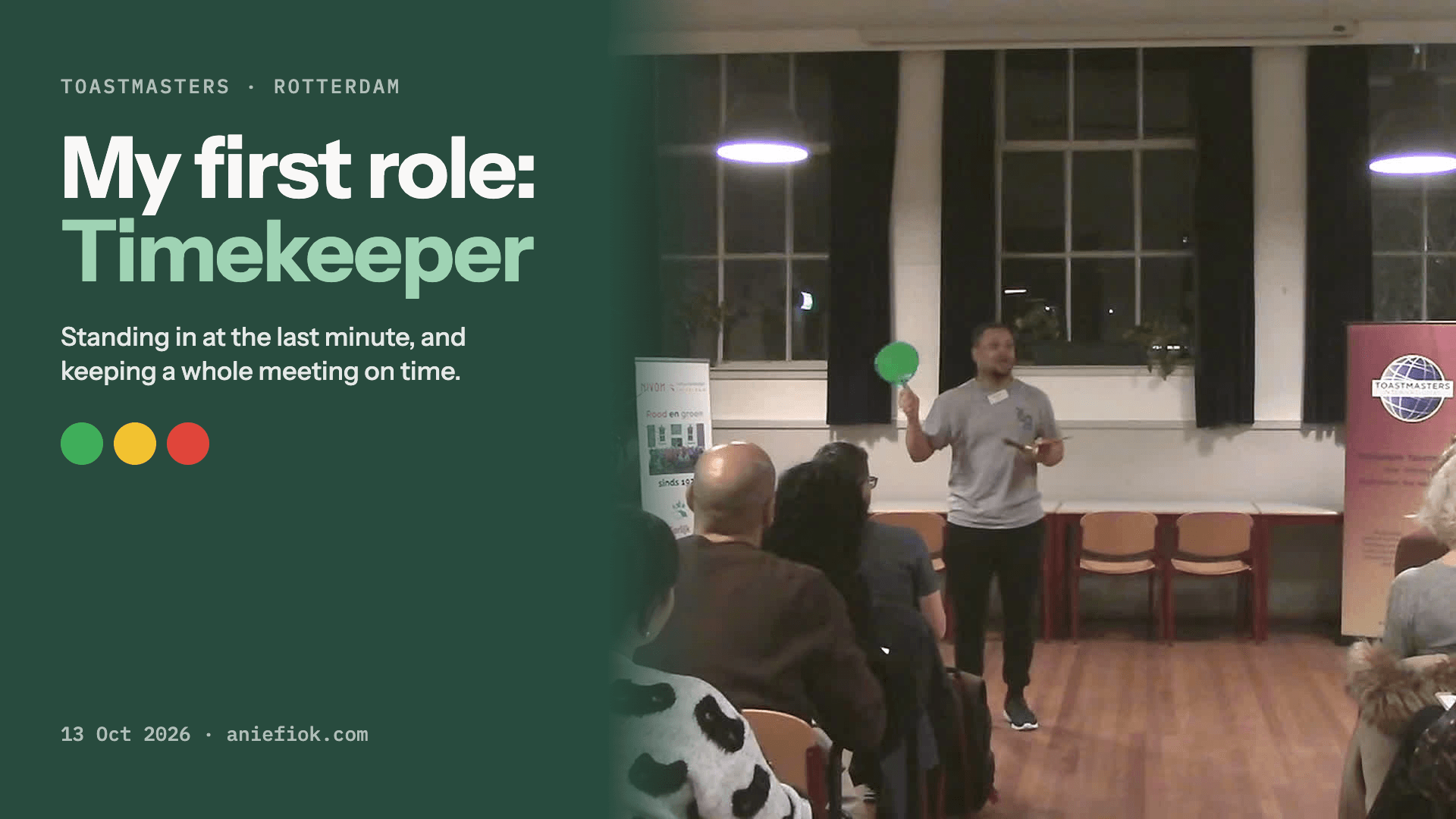
On 13 October the Toastmaster of the evening read out the agenda and reached the timekeeper. The name on the agenda was Cristian's. He couldn't do it, so I stood in at the last minute.
The role is small and easy to underestimate. You explain three cards at the start of the meeting. You watch the clock while everyone else watches the speakers. At the end you report on who kept to time. In practice it was my first time speaking at the front of the club.
What I said at the start
Green means you are well into your time and doing fine. Amber means it's time to bring the speech to a close. Red means you're at the limit. I had a line ready about what comes after the red card. Halfway through it, someone in the room helpfully corrected me: "You have 30 seconds." I laughed, kept going, and finished the point. I left that moment in the clip on purpose.
What I got wrong
During the panel discussion I rang the bell. The host had told me the panel was 20 minutes; the agenda said 40. I timed it against the wrong number. The panel ran 28 minutes, well inside its real slot. The panel was on time; my bell wasn't.
The fix is boring and useful: check the printed agenda before the meeting, not the verbal brief. As a timekeeper your job is to be the reference, so your reference has to be right.
What I noticed from the side of the room
- Everyone kept to time. Most speakers finished before I even raised the green card.
- Watching the clock instead of the speaker shows you pacing very clearly: who rushes the opening, who slows down at the end, who uses a pause.
- Two minutes at the front still felt like a speech. Having one sentence ready for each card made it easy to start.
Next
I'm on Level 1 of the Visionary Communication path. Next steps: ask for a mentor, and book my Ice Breaker. That will be my first prepared speech, and I'll post it here.